
New Mexico Can Build Stronger TNR Laws for Community Cats
TNR laws are changing across the country. More states now recognize Trap-Neuter-Return as a humane, practical way to manage community cats. New Mexico already has strong TNR work happening through Street Cat Hub, local caregivers, shelters, veterinarians, and animal control partners. What we still need is clear statewide law that protects TNR, caregivers, community cats, and the agencies doing this work.
New Mexico Still Relies on Local Ordinances
Right now, New Mexico relies mostly on local ordinances. State law gives counties and municipalities authority to create rules for cats and dogs running at large, but it does not clearly define TNR, community cats, caregivers, ear-tipping, or return-to-field.
New Mexico's animal cruelty law also does not clearly say that returning a healthy community cat after spay/neuter and vaccination is not abandonment.
That leaves too much room for confusion.

Local Progress Shows What Is Possible
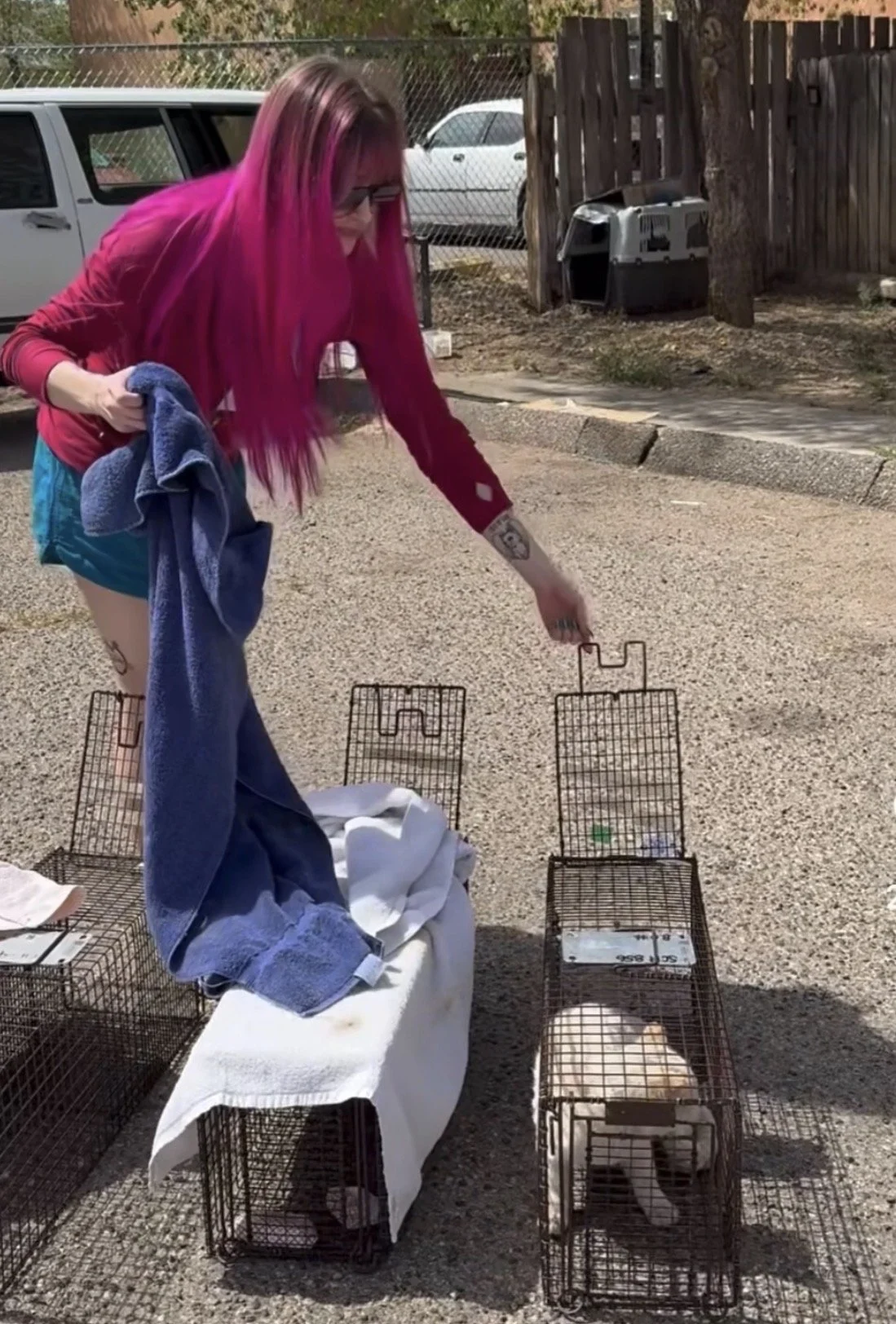
Some New Mexico communities have taken useful steps. Albuquerque directs residents to Street Cat Hub and Animal Humane New Mexico for help with feral and community cats. Street Cat Hub provides TNR services for free-roaming cats in Albuquerque and Bernalillo County.
Bernalillo County gives New Mexico one of its best local models. Its ordinance says abandonment does not apply to TNR of feral cats. It also says a person or organization managing unowned cats through TNR is not automatically considered the cat's owner, keeper, harborer, possessor, custodian, or caretaker.
That matters because caregivers should not face legal risk simply because they are helping cats

Some Rules Still Need Work. Other local rules show why statewide clarity matters.
Doña Ana County recognizes TNR, but it also limits return near schools, day-care centers, nursing homes, parks, county property, arroyos, and within two miles of the Rio Grande.
Those broad limits can make legal return hard or nearly impossible in many areas. When return becomes too restricted, TNR loses its purpose.
Other States Are Moving Ahead
New Mexico does not need to start from scratch.
Other states are already showing what strong TNR policy can look like.
Using a strict count, at least seven states have state-level TNR-specific laws, protections, or funding policies: Utah, Illinois, Nevada, Delaware, Texas, Colorado, and Kansas.
That number is important. It shows TNR has moved from rescue work into public policy. States are recognizing that community cats need clear, humane, workable laws.
Utah and Illinois Protect Caregivers
Utah's Community Cat Actgives one of the clearest models. It defines community cats, caregivers, colonies, sponsors, ear-tipping, and community cat programs. It also allows cats to be sterilized, vaccinated against rabies, ear-tipped, and returned to the place where they live.
Illinois law protects caregivers by stating that an "owner" does not include a feral cat caretaker who participates in a trap-spay-neuter-rabies vaccination-and-return program.
New Mexico needs that same protection for caregivers.
Kansas, Texas, and Nevada Clarify Abandonment
Nevada law, Texas HB 3660, and Kansas HB 2413 focus on one key issue: TNR is not abandonment.
These laws protect people who humanely trap cats, provide spay/neuter and vaccination, and return the cats to the place where they were found.
That is one of the most important changes New Mexico can make.
Delaware Supports Return-to-Field
Delaware's HB 235 goes further by defining free-roaming cats and caregivers, supporting spay/neuter and vaccination, protecting community cats under cruelty laws, and giving shelters a legal path for return-to-field programs.
That kind of law helps shelters avoid holding healthy, unsocialized cats in cages when TNR is the better outcome.
Colorado Adds Funding to the Policy
Colorado's 2025 law adds another piece New Mexico should consider: funding.
It supports grants for trapping, sterilizing, vaccinating, ear-tipping, veterinary care, caretaker training, animal control training, public education, and mobile clinic work.
That matters in a rural state like New Mexico, where distance and cost can block access to spay/neuter.
What New Mexico Should Borrow
New Mexico should use the best parts of these policies:
Define community cats, TNR/TNVR, caregivers, ear-tipping, and return-to-field.
State clearly that humane TNR is not abandonment.
Protect caregivers from being treated as owners.
Allow healthy community cats to return after spay/neuter, rabies vaccination, ear-tipping, and medical review.
Route sick, injured, friendly, and adoptable cats toward care, foster, rescue, or adoption.
Make clear that TNR does not allow dumping owned cats.
Create funding for rural spay/neuter, mobile clinics, public education, and animal control training.
Why ClearTNR Laws Matter
Vague law slows down good work. Clear TNR laws protect cats. They protect caregivers. They give shelters and animal control officers a humane option. They reduce shelter intake. They help communities prevent kitten births rather than reacting to the same problem year after year.
Street Cat Hub and other New Mexico partners are already doing the work. Now New Mexico needs laws that match the work.
How You Can Help
Support local TNR. Donate. Volunteer. Share accurate information. Speak with city, county, and state leaders.
Delaware, Kansas, Utah, Illinois, Nevada, Texas, and Colorado show that stronger TNR laws are possible.
New Mexico should be next.