
Protecting Community Cats When Bears Are Active
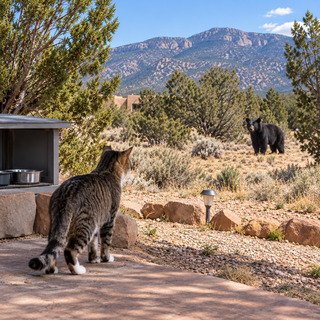
Community cat safety around bears starts with the feeding routine. Cats need regular food and water, but unattended bowls can draw bears into the places where cats eat and shelter.
A bear does not have to attack a cat to put the colony at risk. Its presence can scatter cats, disrupt their routine and create a dangerous situation for the cats, caregivers, neighbors and the bear.
Why This Matters in New Mexico
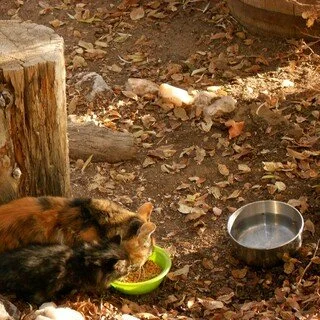
During drought and periods of limited natural food, bears may travel into neighborhoods looking for easy meals. Cat food, birdseed, garbage, fruit and standing water can all bring a bear closer to homes.
The New Mexico Department of Wildlife reported increased bear conflicts in 2026. When a bear finds food at a cat feeding station, it may return again and again.
Removing the food protects the cats. It also protects the bear. Bears that become comfortable around people and homes may face relocation or euthanasia.
Feed the Cats Without Feeding the Bears
Feed community cats at the same time and place each day. Choose daylight hours and remain at the site while they eat.
Best Friends Animal Society recommends serving only enough food for one meal and removing leftovers promptly. Alley Cat Allies advises picking up uneaten food after 30 minutes.
Follow these steps:
Call the cats at their regular feeding time.
Stay nearby while they eat.
Serve only what they can finish in one meal.
Pick up food and bowls within 30 minutes.
Remove every crumb, lid, can and piece of trash.
Store cat food inside or in a bear-resistant container.
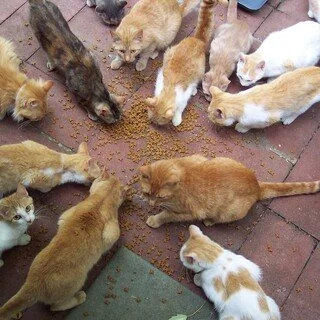
Do not place food directly on the ground. Food scattered across dirt or pavement is difficult to clean up.
Use clean stainless-steel or ceramic bowls or a washable, food-safe tray. Never allow cats to eat from an open metal can. Sharp edges can cause injuries.
Do Not Leave Water Unattended
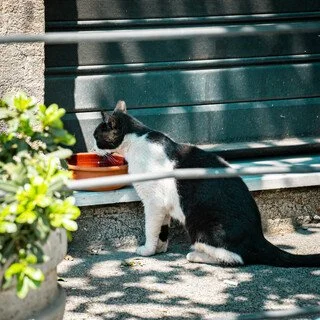
Community cats need fresh water, especially during New Mexico’s hot months. However, water can also attract bears and other wildlife.
If bears are active in your area, give the cats water during their supervised feeding time. Remove the water bowl when you leave.
A covered feeding station may protect food from rain, but it will not keep a bear out. Do not use a feeding shelter as an excuse to leave food or water unattended.
Bird Feeders Can Put Cats at Risk
Birdseed is an easy, high-calorie meal for a bear. Suet, seed blocks and seed scattered under feeders can draw bears into the same yards where community cats live.
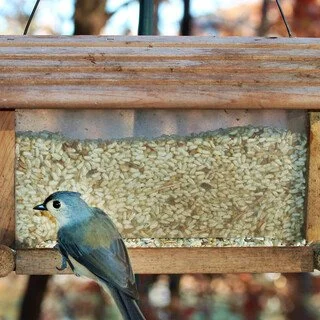
The New Mexico Department of Wildlife recommends removing bird feeders from areas accessible to bears.
When bears are active:
Take down bird feeders.
Clean up seed from the ground.
Store birdseed indoors.
Secure garbage.
Pick up fallen fruit.
Clean and store outdoor grills.
A hanging feeder is not bear-proof. Bears can climb, reach and pull down many types of feeders.
If You See a Bear at the Feeding Site
Do not approach the bear or try to feed it. Do not run.
Stay calm, give the bear a clear escape route and slowly back away. Never move between a mother and her cubs. Wait until the bear has left before removing food or bowls.
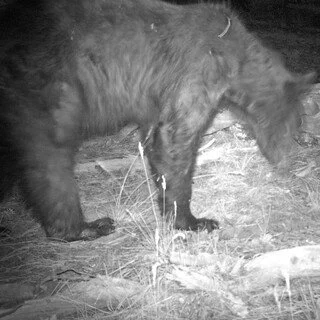
If a bear repeatedly visits the feeding site, stop leaving anything that may attract it and contact the New Mexico Department of Wildlife for guidance.
Community cats cannot make a feeding site safe for themselves. They depend on you to control the food, water and cleanup.
Feed on a schedule. Stay with the cats. Pick up everything when they finish. Your routine can keep community cats fed without inviting bears into their living area.